Affiliate Disclosure: Some links are affiliate links, meaning we may earn a commission if you purchase—at no extra cost to you. Prices and availability can change. We base our content on independent research, not direct input from manufacturers or utilities unless stated. Unless explicitly stated, we do not personally test every product. Our reviews are based on independent research, product documentation, and user/reviewer feedback.
Managing home energy costs in 2026 has evolved from a simple weekend project into a data-driven strategy. As utility rates fluctuate and the push for residential decarbonization intensifies, the smart thermostat remains the most effective “entry point” for homeowners looking to reclaim control over their monthly expenses.
However, the market has shifted. In 2026, we are no longer just looking for a device that changes the temperature from a smartphone. We are looking for “Privacy-First” systems that protect home data, “Matter-certified” devices that work across all platforms, and “Indoor Air Quality” (IAQ) sensors that protect our health. This guide provides a comprehensive analysis of the top smart thermostats currently available, designed specifically for the homeowner who wants maximum ROI with minimum technical frustration.
Atomic Answer: Which Smart Thermostat is Best in 2026?
The best smart thermostat in 2026 is the Ecobee Smart Thermostat Premium because it integrates high-fidelity energy savings with advanced indoor air quality monitoring. For those prioritizing data security, the Eve Thermostat (coming soon) is the premier choice for local-only, Matter-over-Thread connectivity. If your primary goal is automated learning with a premium aesthetic, the Nest Learning Thermostat (4th Gen) remains the leader in AI-driven temperature scheduling.
The Evolution of the Smart Thermostat in 2026
Before diving into specific models, it is essential to understand why 2026 is a “turning point” for home energy tech. Two years ago, smart home devices were often siloed, meaning a Nest thermostat did not always play well with an Apple HomePod or an Amazon Alexa setup.
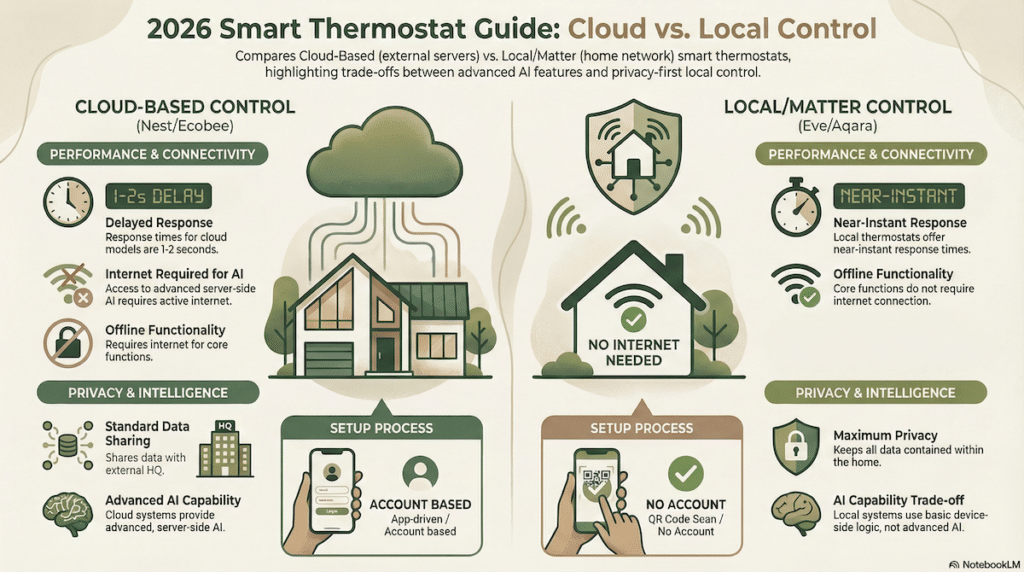
Today, the Matter standard has largely solved this. Most top-tier thermostats now use Matter over Thread, a wireless protocol that is faster, more reliable, and does not require a central “cloud” to function. This means that if your internet goes out, your home stays comfortable. Furthermore, the rise of “Revenue-Grade” monitoring allows these devices to show you exactly how many dollars you are spending in real-time, rather than just showing a percentage of usage.
1. The All-In-One Powerhouse: Ecobee Smart Thermostat Premium
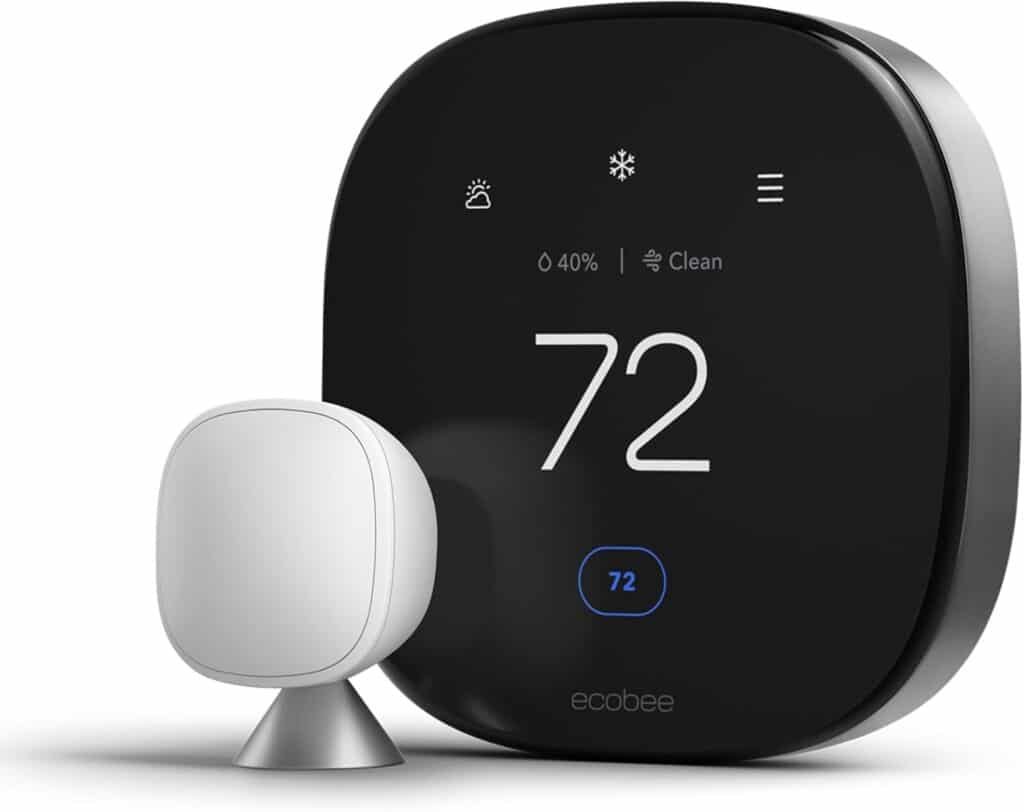
The Ecobee Smart Thermostat Premium is the most complete package on the market for 2026. It is more than a temperature controller: it is a comprehensive home health hub.
The User Experience
For a homeowner who has never used a smart device, the Ecobee is remarkably intuitive. The interface is clean, and the mobile app provides “Energy Reports” that compare your home’s efficiency to similar homes in your area. This “gamification” of energy savings often leads to an additional 5 percent reduction in usage as homeowners adjust their habits based on the data.
Key Features and 2026 Upgrades
- Built-in Air Quality Monitor: It tracks VOCs (Volatile Organic Compounds) and estimated CO2 levels. If your air quality drops, the thermostat can trigger your HVAC fan to circulate fresh air.+1
- SmartSensor Technology: This remains Ecobee’s “killer feature.” By placing a small sensor in a bedroom that is typically too cold, the thermostat ignores the temperature in the hallway and prioritizes the room you are actually using.
- Siri and Alexa Integration: It features a built-in speaker and microphone, allowing it to act as a smart speaker for your kitchen or living room.
The Verdict for 2026
If you want the most “Intelligence per Dollar,” the Ecobee Premium is the clear winner. It is particularly effective for multi-story homes where temperature imbalances are common. This is the smart thermostat I personally use in my home.
2. The Design Leader: Nest Learning Thermostat (4th Gen)
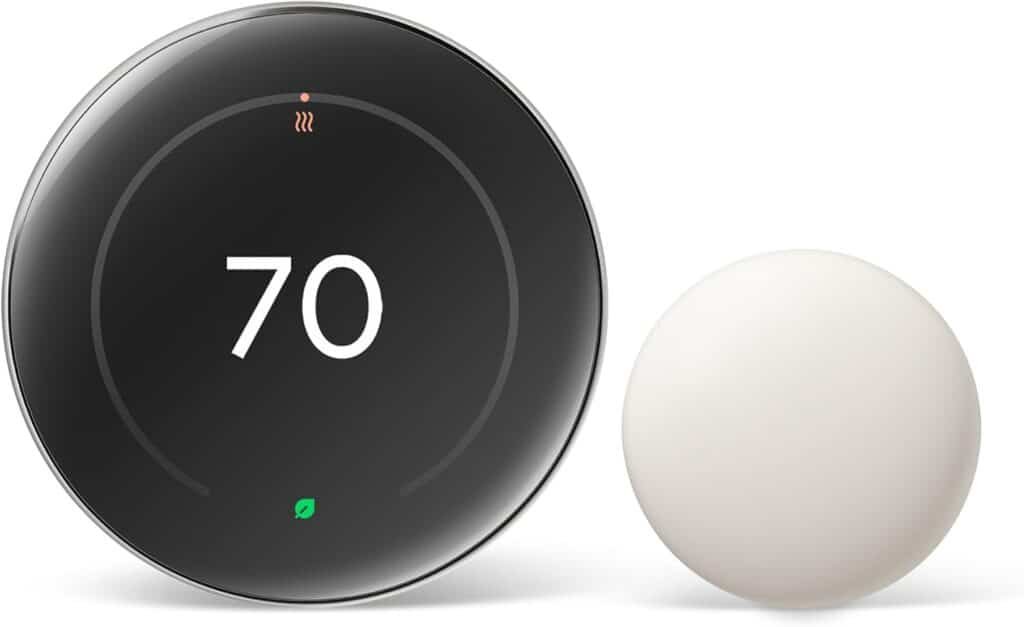
Google’s Nest remains the “gold standard” for aesthetic design and effortless automation. The 4th Generation model, released for the 2026 market, focuses heavily on AI-driven “Renewable Power” optimization.
The User Experience
The Nest is famous for its “Learning” capability. For the first week, you simply turn it up when you are cold and down when you leave for work. The device builds a schedule based on those manual adjustments. By day ten, you rarely have to touch it again.
Key Features and 2026 Upgrades
- Dynamic Peak Pricing Integration: In 2026, many utility companies offer lower rates at night. The Nest automatically “pre-cools” or “pre-heats” your home during these cheap hours so it can remain idle during expensive “peak” hours.
- Farsight 2.0: The high-resolution display can show the time, weather, or your energy savings for the month. It only lights up when it senses you entering the room, saving small amounts of electricity over time.
- HVAC Monitoring: It uses sound and vibration data to “hear” if your furnace or AC is struggling, often alerting you to a failing motor before a total breakdown occurs.
The Verdict for 2026
The Nest 4th Gen is perfect for the homeowner who wants a “set it and forget it” lifestyle. It is the most beautiful device on this list and offers the most sophisticated AI learning algorithms.
3. The Privacy Disruptor: Eve Thermostat (Matter Edition)
Not yet available for purchase, the newest contender for 2026 is the Eve Thermostat. As homeowners become more concerned about big-tech companies tracking their daily habits, Eve has carved out a niche by offering “Total Privacy.”
The User Experience
Eve operates differently than Nest or Ecobee. There is no “Eve Cloud.” There is no requirement to create an account. All your data stays on the device and your local home hub (like an Apple TV or HomePod). This makes it the fastest responding thermostat on our list because the signal never has to travel to a distant server and back.
Key Features and 2026 Upgrades
- Matter over Thread: This is the future of connectivity. It creates a “mesh” network in your home, ensuring that the thermostat stays connected even in the far corners of a large house.
- Local Schedules: Unlike other brands that might fail if the Wi-Fi goes down, Eve stores your entire schedule locally on the hardware.
- Simple, Stealth Design: It features a minimalist LED display that disappears when not in use, making it ideal for bedrooms or modern interiors.
The Verdict for 2026
If you are an Apple Home or Matter enthusiast who values data privacy above all else, the Eve Thermostat is the only logical choice. It is efficient, secure, and incredibly fast. Bookmark this page and check back regularly to learn when the Ever Thermostat is available for purchase.
Technical Comparison: Matter vs. Cloud-Based Systems
In 2026, the “back-end” technology of your thermostat determines its longevity. Use this table to understand which architecture fits your home.
The Beginner’s Guide to DIY Installation
One of the biggest hurdles for new homeowners is the fear of electrical work. However, 2026 thermostats are designed for “Consumer Installation.” Here is a simplified 4-step process to get you through your first install. If you are uncomfortable with this process, please contact a professional installer.
Step 1: The Power Down
Go to your electrical panel and turn off the switch labeled “HVAC” or “Furnace.” To verify it is off, try to turn on your current thermostat. If the screen is blank or the air doesn’t kick on, you are safe to proceed.
Step 2: Identifying the C-Wire
Most modern thermostats require a “C-Wire” (Common Wire) for constant power. When you pull off your old thermostat, look for a blue or black wire.
- If you have one: Great! You just plug it into the “C” slot on the new unit.
- If you don’t: Do not worry. Ecobee includes a “Power Extender Kit” (PEK) in every box. This allows you to “create” a C-wire using your existing wires in about 10 minutes at the furnace.
Step 3: Labeling and Photographing
Before you disconnect any wires from your old thermostat, take a clear photo with your phone. Most brands include small stickers in the box. Label each wire according to the letter it is plugged into (R, W, Y, G). This ensures that even if the colors are non-standard, you know exactly where they go on the new unit.
Step 4: The Snap and Sync
Screw the new backplate into the wall (most have a built-in level). Push the labeled wires into the matching terminals on the new thermostat. Snap the faceplate on, turn the power back on, and follow the on-screen prompts on your smartphone.
Maximizing Your ROI: The Financial Logic of 2026
A smart thermostat is an investment that should pay for itself within 12 to 18 months. Here is the breakdown of how to ensure that happens.
The 10 Percent Rule
Data from the Department of Energy shows that turning your thermostat back by 7 to 10 degrees for 8 hours a day (while you are at work or asleep) can save you up to 10 percent a year on heating and cooling. A smart thermostat automates this “setback,” ensuring you never forget to save money.
Utility Rebates and Tax Credits
In 2026, federal “Green Home” initiatives offer significant incentives.
- Instant Rebates: Many utility providers offer an instant $50 to $100 discount if you buy through their marketplace.
- Demand Response Programs: You can opt-in to programs where your utility company “nudges” your thermostat by 1 or 2 degrees during extreme heat waves to prevent grid blackouts. In exchange, they often give you an annual credit of $25 to $50.
Final Recommendation: Which One is Right for You?
Choosing the right thermostat depends on your specific household priorities:
- Choose the Ecobee Smart Thermostat Premium if you have “hot or cold spots” in your house and want to monitor your indoor air quality. It is the best all-around tool for the modern family.
- Choose the Nest Learning Thermostat (4th Gen) if you want the highest level of automation and a beautiful piece of hardware that handles everything for you.
- Choose the Eve Thermostat if you are building a Matter-based smart home and want to ensure that your private data never reaches a corporate server.
Regardless of your choice, the transition to a smart thermostat is the single most effective way to lower your home’s carbon footprint and increase your monthly savings in 2026.
Affiliate Disclosure: Some links are affiliate links, meaning we may earn a commission if you purchase—at no extra cost to you. Prices and availability can change. We base our content on independent research, not direct input from manufacturers or utilities unless stated. Unless explicitly stated, we do not personally test every product. Our reviews are based on independent research, product documentation, and user/reviewer feedback.